
Japanese Cotton Cheesecake
My First Bite
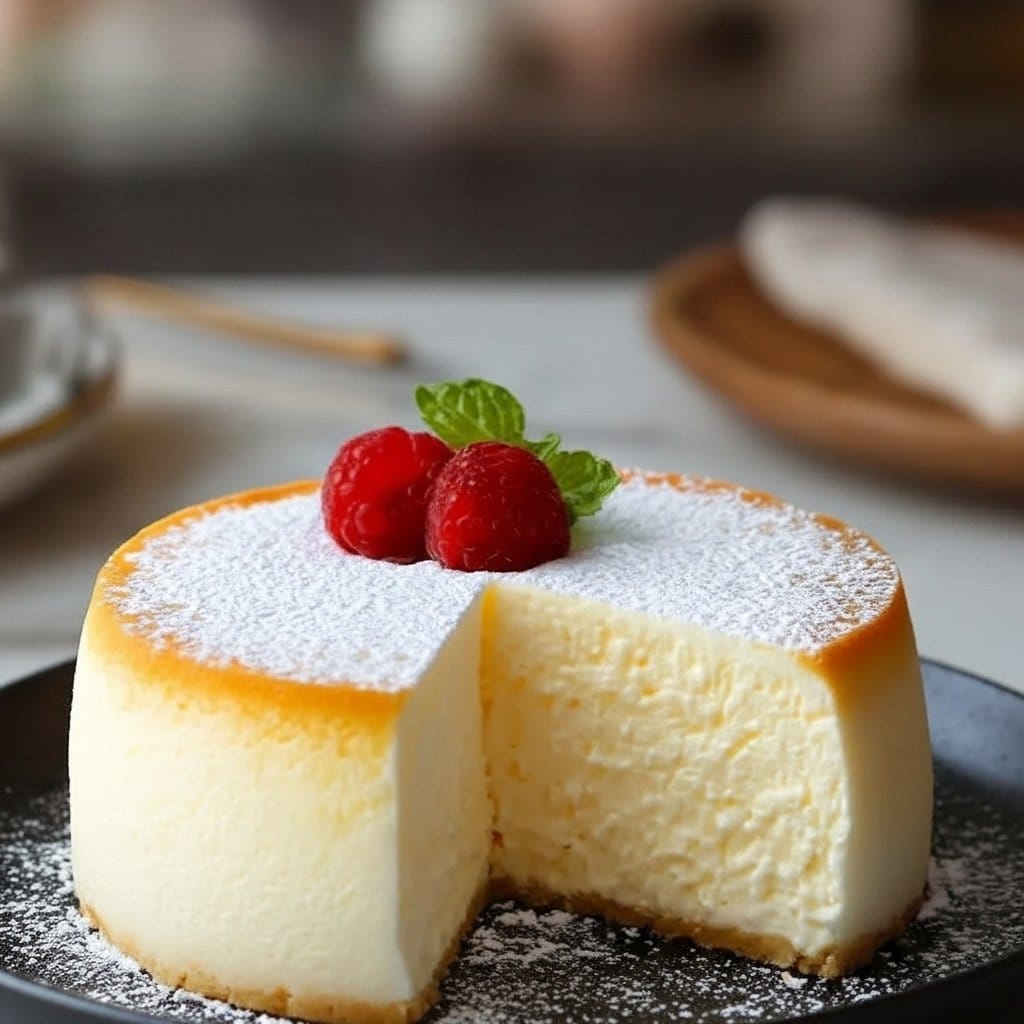
I remember the first time I bit into a Japanese cotton cheesecake: the cake felt almost like a cloud, and it melted where my tongue met it. I had been chasing a light, tender dessert for a long time, and that day I finally found it. The texture is delicate, slightly jiggly, and feather-light, with a whisper of cream cheese richness that never feels heavy.
Introduction
I discovered this recipe while searching for a cake that felt like a dessert and a comfort at the same time. I baked it for a rainy afternoon tea with my family, and watching everyone smile at that first forkful made it an instant favorite. The combination of warm, eggy aroma and a billowy texture made the kitchen feel like a little bakery.
If you enjoy delicate bakes, you might also love these melt-in-your-mouth chocolate orange shortbread cookies for dessert pairings or tea-time treats.
Why Make This Recipe
This Fluffy Japanese Cotton Cheesecake is special because it balances richness and airiness. It is lighter than classic Western cheesecakes but still carries that comforting cream cheese flavor. It’s great for gatherings when you want an elegant dessert that is surprisingly easy to transport and slice. Benefits at a glance:
- Lighter texture than traditional cheesecakes – easier on the stomach.
- Feels fancy but uses simple pantry ingredients.
- Crowd-pleasing and versatile for breakfast, dessert, or tea.
Ingredients You’ll Need
For the Cake Base
- 250 g full-fat cream cheese, softened to room temperature (important for smooth batter)
- 50 g unsalted butter, softened
- 100 ml whole milk
- 60 g cake flour, sifted (substitute: rice flour for gluten-free)
- 20 g cornstarch, sifted
- 1 teaspoon vanilla extract
- 1 teaspoon fresh lemon juice
- Pinch of salt
For the Egg Separation and Meringue
- 6 large eggs, separated (yolks and whites at room temperature)
- 100 g granulated sugar
- 1/4 teaspoon cream of tartar or 1 teaspoon lemon juice (helps stabilize meringue)
Notes on quality and substitutions
- Use full-fat cream cheese for the best flavor and texture. Low-fat versions make the cake less tender.
- Cake flour gives the soft crumb; if you only have plain flour, remove 2 tablespoons per 60 g to mimic a lighter flour.
- If dairy-free is required, try a stable vegan cream cheese and aquafaba meringue, but expect texture differences.
How to make Fluffy Japanese Cotton Cheesecake That Melts in Your Mouth
Step 1: Prepare the Pan and Oven
- Preheat the oven to 160°C (320°F).
- Line the bottom and sides of an 8 or 9-inch round pan with parchment. Wrap the outside of the pan with foil to prevent water entering during the water bath.
Step 2: Heat the Cream Cheese Mixture
- In a heatproof bowl over simmering water or in a microwave in short bursts, combine 250 g cream cheese, 50 g butter, and 100 ml milk until smooth and warm to the touch.
- Whisk in 1 teaspoon vanilla, 1 teaspoon lemon juice, and a pinch of salt.
Step 3: Mix Dry Ingredients and Yolks
- Sift 60 g cake flour and 20 g cornstarch into the warm cream cheese mixture.
- Add the 6 egg yolks one at a time, stirring until smooth. The batter should be silky and slightly thick.
Step 4: Make the Meringue
- In a clean bowl, beat the 6 egg whites with 1/4 teaspoon cream of tartar until frothy.
- Gradually add 100 g sugar while beating, until you reach stiff, glossy peaks. Stop when the meringue holds a firm peak and looks glossy.
Step 5: Combine Batter and Meringue
- Fold one third of the meringue into the yolk batter to lighten it. Then gently fold in the remaining meringue in two additions.
- Use a spatula and fold in a circular motion to keep as much air as possible. The final batter should be airy and ribbon-like.
Step 6: Bake in a Water Bath
- Pour batter into the prepared pan and smooth the top. Tap gently to remove large air bubbles.
- Place the pan in a larger roasting pan. Pour hot water into the outer pan until it reaches about halfway up the cake pan.
- Bake at 160°C (320°F) for 55 to 65 minutes, or until the top is light golden and the center still jiggles just slightly when gently shaken.
Step 7: Cool Gently
- Turn the oven off and leave the door closed for 10 to 15 minutes to prevent a sudden temperature change.
- Remove the cake from the oven, take it out of the water bath, and let it cool on a rack. For a classic smooth top, you can invert the cake to cool upside down, propping it with a chopstick so it does not collapse.
Step 8: Chill and Serve
- Chill in the refrigerator for at least 2 hours before serving for clean slices. Slice with a hot, dry knife for neat pieces.
Visual cues
- Meringue: glossy, holds stiff peaks.
- Batter: light, airy, ribbon stage.
- Baked cake: lightly browned, surface taut, center jiggles gently.
Tips & Recipe Variations
- Use room temperature ingredients for a smoother emulsion.
- Whisk the cream cheese mixture until very smooth to avoid lumps.
- Fold the meringue gently to preserve air; overmixing deflates the batter.
- To prevent cracks, bake in a water bath and avoid opening the oven early.
- Gluten-free option: substitute cake flour with a 1:1 gluten-free flour blend or rice flour.
- Lighter sugar alternative: reduce sugar by 10 to 20 g if you prefer less sweetness.
- Make ahead: bake and refrigerate up to 48 hours. Bring to cool room temperature before serving.
- Freezing: wrap tightly and freeze up to 1 month. Thaw overnight in the fridge.
How to Serve
- Dust with powdered sugar and top with fresh berries or a light berry compote.
- Serve with green tea, milky coffee, or a citrusy Earl Grey to balance the richness.
- Plate slices with a few edible flowers or a drizzle of honey for an elegant finish.
- Serving size: 8 to 10 slices. Each slice is approximately 180 to 250 calories depending on portion.
Frequently Asked Questions
Q: Can I make this recipe ahead of time? A: Yes. Bake, cool, and refrigerate up to 48 hours ahead. Chill well for best slicing.
Q: Can I freeze leftovers? A: Yes. Wrap tightly and freeze up to 1 month. Thaw in the fridge overnight.
Q: What can I use instead of cake flour? A: Use a light plain flour with 2 tablespoons less per 60 g, or a gluten-free flour blend for gluten-free versions.
Q: How do I prevent the cake from sinking? A: Avoid overfolding the meringue, bake in a water bath, and let the cake cool gently in the oven for 10 to 15 minutes after baking.
“This cheesecake was the lightest dessert I’ve ever made at home. The texture is ethereal and the flavor is perfectly balanced. Every guest asked for the recipe.” – A happy baker
Conclusion
This Fluffy Japanese Cotton Cheesecake is one of my most treasured recipes because it brings a delicate, elegant moment to everyday life. It’s a reminder that simple ingredients, handled with care, can produce something truly special. If you want a step-by-step visual guide and more tips to achieve the jiggliest texture, check out The Jiggly Japanese Souffle Cheesecake – Fluffiest Bake Yet. I hope you try this recipe, enjoy the process, and share your results. Please leave a comment to tell me how yours turned out.
Japanese Cotton Cheesecake
Ingredients
Method
- Preheat the oven to 160°C (320°F). Line the bottom and sides of an 8 or 9-inch round pan with parchment. Wrap the outside of the pan with foil to prevent water entering during the water bath.
- In a heatproof bowl over simmering water or in a microwave in short bursts, combine the cream cheese, butter, and milk until smooth and warm to the touch. Whisk in vanilla, lemon juice, and a pinch of salt.
- Sift the cake flour and cornstarch into the warm cream cheese mixture. Add the egg yolks one at a time, stirring until smooth. The batter should be silky and slightly thick.
- In a clean bowl, beat the egg whites with cream of tartar until frothy. Gradually add the sugar while beating, until you reach stiff, glossy peaks.
- Fold one third of the meringue into the yolk batter to lighten it. Gently fold in the remaining meringue in two additions, preserving as much air as possible.
- Pour batter into the prepared pan and smooth the top. Tap gently to remove large air bubbles. Place the pan in a larger roasting pan and pour hot water into the outer pan until it reaches halfway up the cake pan. Bake for 55 to 65 minutes, until the top is light golden and the center jiggles slightly when gently shaken.
- Turn the oven off and leave the door closed for 10 to 15 minutes. Remove the cake from the oven, take it out of the water bath, and let it cool on a rack. Invert the cake to cool upside down, propping it with a chopstick.
- Chill in the refrigerator for at least 2 hours before serving for clean slices. Slice with a hot, dry knife for neat pieces.
Notes

- One-Pot Macaroni Cheeseburger Soup Recipe - January 13, 2026
- Cheesy Beef Rigatoni Bake - January 5, 2026
- Easy Sheet Pan Blueberry Shortcake - January 4, 2026